The Kalahari is a second-safari place, and Tswalu suits people who have already done a busy reserve and now want room. If this is your first safari and you want elephant at breakfast and a leopard by dinner, go to the Lowveld. If you have done that, and found yourself counting vehicles at the sighting, the southern Kalahari is where you go to stop counting.
Updated 21-Dec-2022
Why is the Kalahari a different kind of safari?
Because the thing on offer is space. The Tswalu Motse and Tarkuni page calls the reserve one of southern Africa’s last true wildernesses, and says it treats privacy and unfettered access as the essential amenities rather than optional extras. Tswalu’s own site calls it South Africa’s largest private reserve and guarantees a private safari vehicle, dedicated guide and tracker with every booking. Put those together and you have the Kalahari proposition: your vehicle, your guide, your tracker, and nobody else’s dust on the horizon.
The name helps too. Tswalu means “a new beginning” in Setswana, which is a generous thing to call a reserve and, for anyone on their second or third safari, an accurate one.
What do you actually see in a desert?
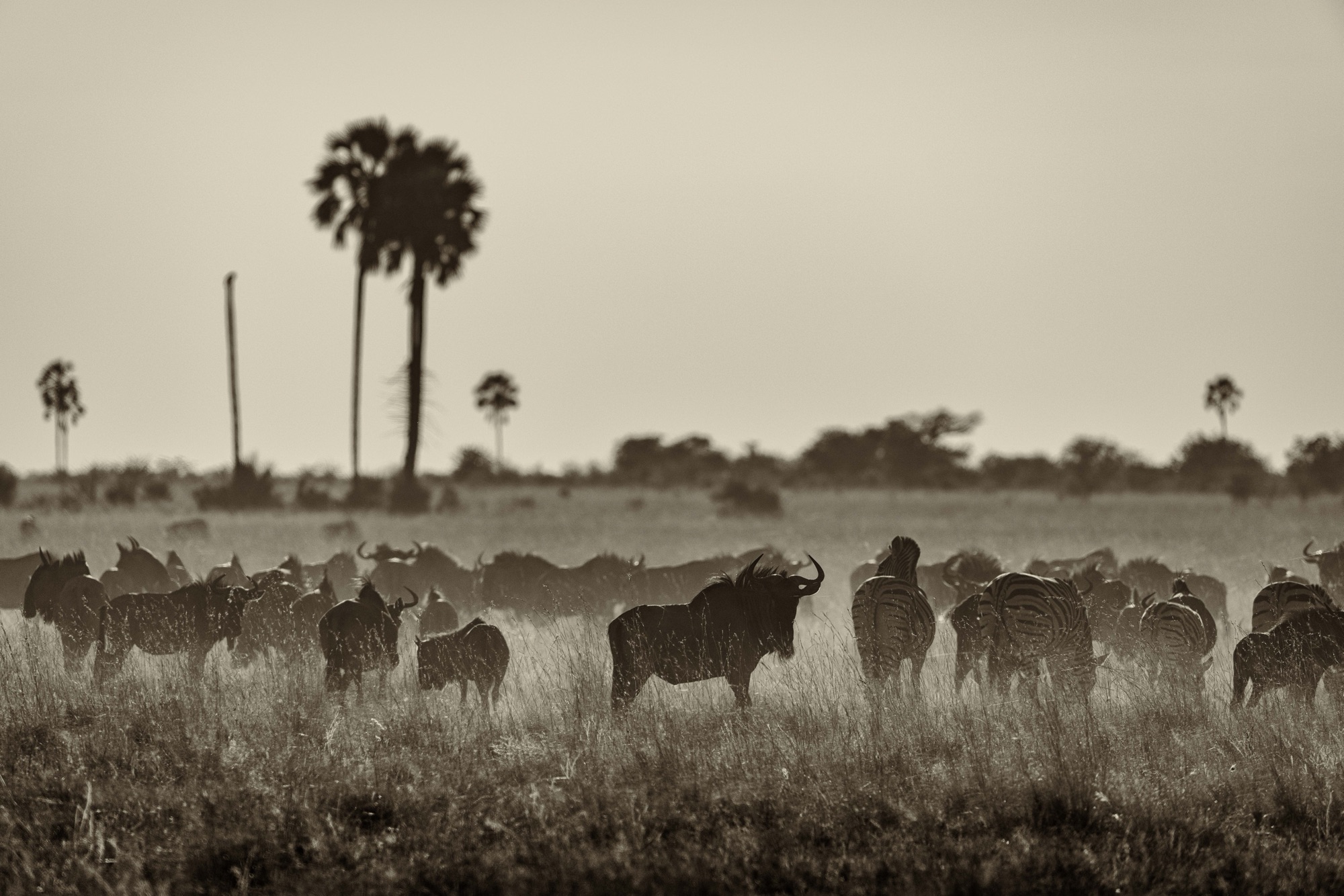
More than the word suggests. The page’s own captions make the case in three frames: cheetah in the long grass, a black-maned Kalahari lion, meerkats. Tswalu’s site extends the list to wild dog, brown hyena, white and desert black rhino, oryx, red hartebeest, and then the animals people cross continents for: aardvark, pangolin, aardwolf, bat-eared fox. These last are the point. In a busy reserve the guide drives to the lion because the radio says so. Here the tracker is reading sand for an animal nobody may have seen this week, and the morning is better for it.
The meerkats are habituated, which means they carry on with their morning with you sitting in it. The cheetah in the long grass is a cheetah in grass that is actually long, and you can see the whole animal, which in thicker country is rarer than it sounds. And the lion gets its full title on the page, black-maned Kalahari lion, as though the desert had its own model. Against red sand, it rather looks like it.
The Motse or Tarkuni: which is which?
The page calls them the two focal points of a stay and borrows the reserve’s own word for them: launchpads. You set out from them each morning and come back when the light has gone red and then gone altogether. Both are built from organic materials and finished to the highest standard, both are shaped by the people of the Kalahari, and both look to the Korannaberg mountains.
| The Motse | Tarkuni | |
|---|---|---|
| What it is | Tswalu’s main camp: nine legae, three of them family legae with two en-suite bedrooms | An exclusive-use thatched homestead in a secluded valley below the Korannaberg |
| Who it sleeps | Two or four per legae; children of all ages welcome | Up to ten guests, five bedrooms under one roof |
| Staff | Private vehicle, guide and tracker | A dedicated team including a private chef, plus the vehicle, guide and tracker |
| Noted on the site | Gardens of indigenous southern Kalahari plants | Plunge pool, shaded verandah, fire pit, boma, upstairs library and spa room |
| Suits | Couples and families who want a camp | A family or group who want the whole house |
The honest summary: the Motse is for people who want room; Tarkuni is for people who want a house with room around it.
What is the evening like?
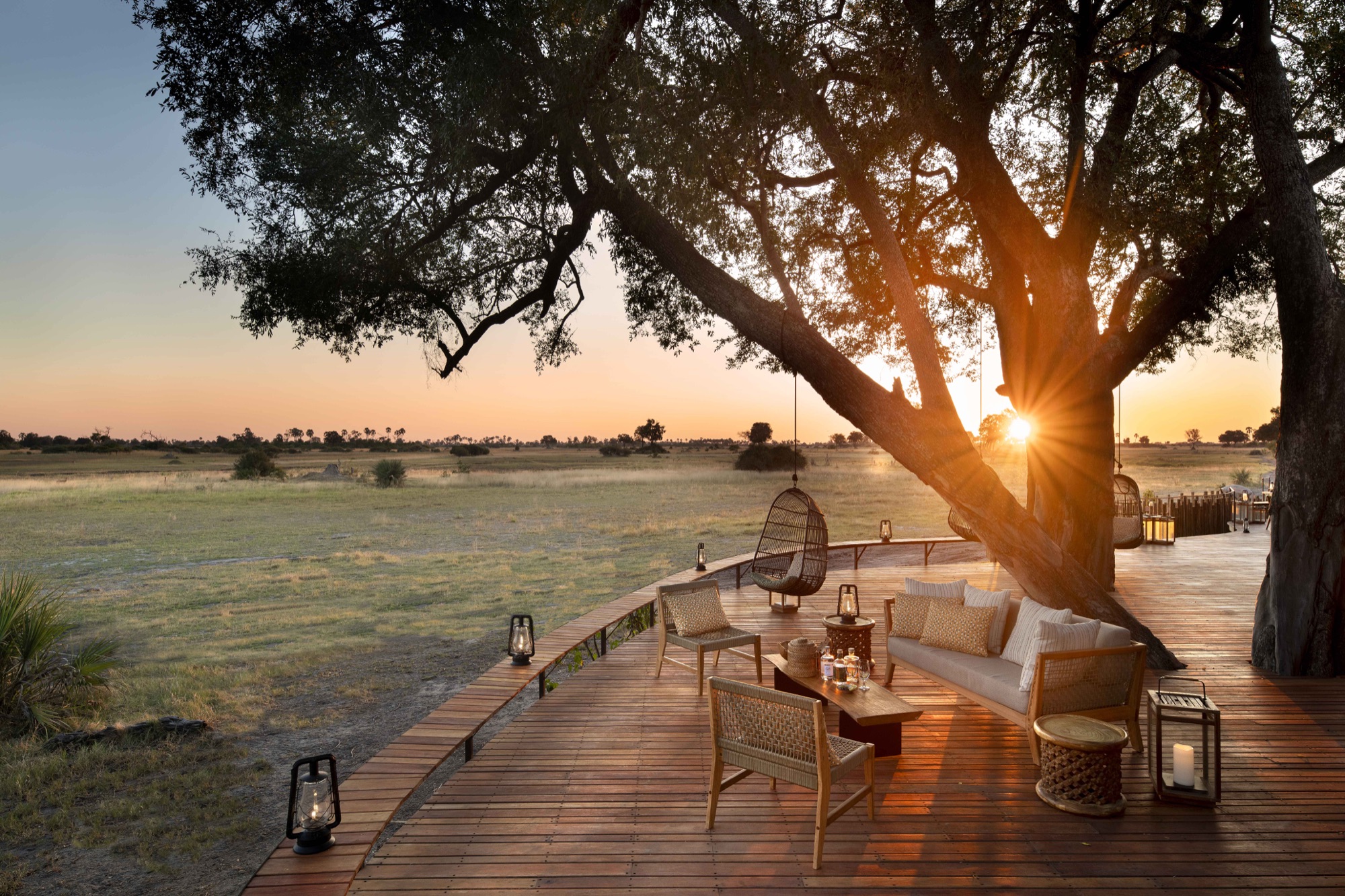
The last caption on the page is “Dinner for two, under the Kalahari sky”, and Tswalu’s site lists dinner on the dunes under the stars and a night under canvas at Malori among its things to do. The Kalahari has very little between you and the sky, and the stars take full advantage. Afterwards, stone, thatch and fire in the lounge, says the page, and a fire in a desert is never decorative.
Who should book Tswalu?
- People on a second or third safari who have done a busy reserve and want the opposite.
- Anyone whose list has aardvark, pangolin or meerkat on it, rather than or as well as lion.
- Families: the Motse takes children of all ages, and Tarkuni gives a large family its own roof.
- Photographers who want red sand, long grass and a horizon with nothing on it.
Who should not: first-timers who want the Big 5 in two days, and anyone who finds silence unsettling. For what sparse country does to a sighting, our post Caracal Hunts Down African Wildcat, from the Kgalagadi Transfrontier Park, is the evidence: nowhere to hide, for anyone. And for the busier end of the argument, our South Africa lodges cover the Lowveld.
Desert, done properly, as the page says. Tell us when you are thinking of travelling and we will see where the Kalahari fits.