
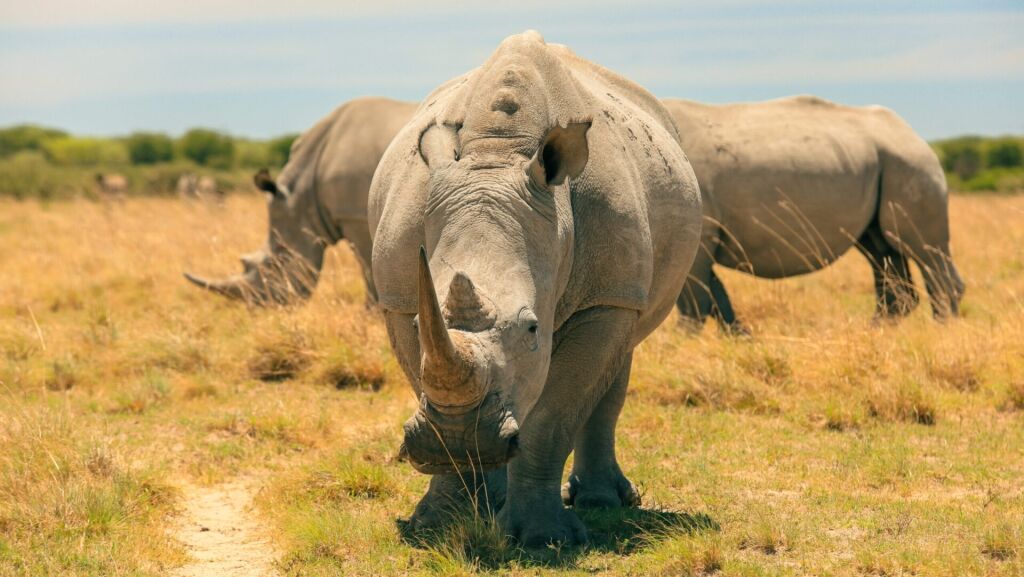
The dehorning initiative at Hluhluwe-iMfolozi Game Reserve in KwaZulu-Natal has faced a significant setback, with at least 20 dehorned rhinos killed for their remaining horn stumps in the past month. Earlier this year, the reserve launched an ambitious project to remove the horns of hundreds of rhinos in an effort to curb relentless poaching in one of South Africa’s key rhino habitats.
Ezemvelo KZN Wildlife, the agency managing the park, had long resisted calls to dehorn rhinos. Concerns about the high costs and the desire to preserve the “natural” rhino experience for tourists played a role in this decision. However, with financial and logistical backing from WWF South Africa, Ezemvelo initiated a collaborative dehorning campaign in April.
The operation also received support from Wildlife ACT, Save the Rhino International, and Zululand Wildlife Vets, yielding immediate positive results. According to WWF, rhino poaching in the park dropped by a staggering 70% to 80% following the mass dehorning.
Despite this initial success, a grim development came to light in October: a poaching gang, allegedly linked to a Mozambique-based syndicate, slaughtered at least 20 dehorned rhinos.
While the dehorning process removes most of the horn to deter poachers, a small section is left behind to prevent harm to the rhino’s growth plate. Unfortunately, even these remnants can still attract poachers willing to kill for minimal returns.
Ezemvelo recently addressed this issue in a statement after Zulu King Misuzulu’s visit to the park. They acknowledged the tragic spike in poaching, stating, “October saw an unfortunate spike, with 20 dehorned rhinos lost to poaching.” However, they also expressed hope that the syndicate had been disrupted following a gunfight where Ezemvelo’s anti-poaching unit killed two foreign poachers.
Jeff Cooke, WWF’s rhino conservation program manager and a former Ezemvelo veteran, weighed in on the matter. He cautioned against prematurely judging the project as a failure. “The poaching rate has declined significantly since April. We’ve had several good months and one bad month. We also need to consider how many more rhinos might have been killed had we done nothing.”
Cooke stressed that the recent killings serve as a reminder for conservation agencies to remain vigilant. “This is a wake-up call for Ezemvelo and others. Dehorning alone isn’t enough if you ease up on anti-poaching efforts. Poachers are motivated by money, and even horn stumps can be worth their risk if there’s little fear of getting caught.”
To counter this, Ezemvelo has bolstered its defenses by installing extensive surveillance systems, deploying strategically placed “smart fencing,” and using K9 units to track intruders. These measures aim to detect and deter poachers before they cause further harm to the reserve’s rhino population.
By Jacu Van Deventer
Contributor @KhakiBush Magazine
Images Credit Envato Elements.

